

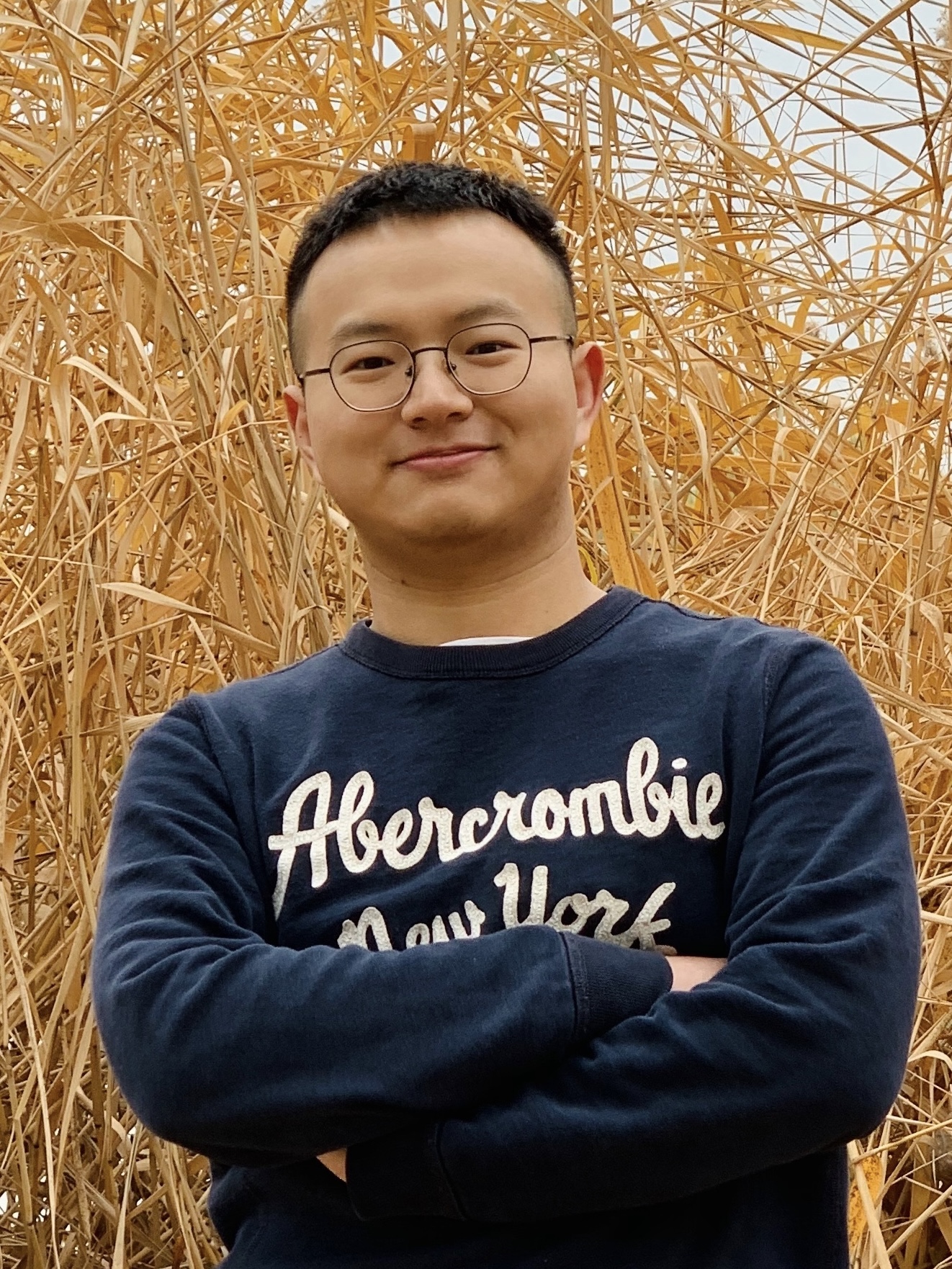
Biography
Junwen is the lead developer of Goldilocks, which uses high-throughput DFT, machine learning and LLM-based AI agents to choose converged, cost-efficient settings for DFT calculations, so that less compute and electricity is wasted on national supercomputers such as ARCHER2.
Goldilocks turns a crystal structure into recommended calculation settings, records the basis for each recommendation, and generates the input files and submission script needed to run it. It draws on machine-learning models and datasets published on PSDI, including converged k-point meshes for more than 17,000 structures. The tool runs as a command-line program, a browser application, an HTTP API and an MCP server for AI assistants; an LLM-based agent, in development, orchestrates scientific workflows and explains its recommendations in plain language. The k-point work is published in Digital Discovery (2026).
Alongside Goldilocks, Junwen works on first-principles methods and their applications: electron–phonon coupling and phonon anharmonicity from DFT and DFPT, including carrier mobility in halide perovskites and the phonon-limited resistivity of metals; nonadiabatic coupling and excited-state dynamics in CP2K; and ferroelectric hafnia.
Highlighted Work

Recommends the settings for a DFT calculation from a crystal structure, records the basis for each recommendation, and generates the input files and submission script, so calculations are neither under-converged nor wasteful. Built as a data-driven pipeline, with funding from the Ada Lovelace Centre and EPSRC (EP/Z530657/1), to cut compute and electricity waste on national supercomputers such as ARCHER2.
Research Interests & Focus
- High-throughput DFT and automated convergence of calculation parameters (Goldilocks)
- Machine learning, LLMs and AI agents for electronic-structure workflows
- Research software for automated DFT: command-line tools, web applications, APIs and MCP servers
- Electron–phonon coupling, phonon anharmonicity and carrier transport from DFT and DFPT
- Halide perovskites and ferroelectric hafnia
- Nonadiabatic coupling and excited-state dynamics in CP2K
- Catalytic, electrochemical and photoactive interfaces
Appointments & Roles
- Computational Scientist(Senior) — STFC Scientific Computing Department, UKRI
- Member — European Theoretical Spectroscopy Facility (ETSF)